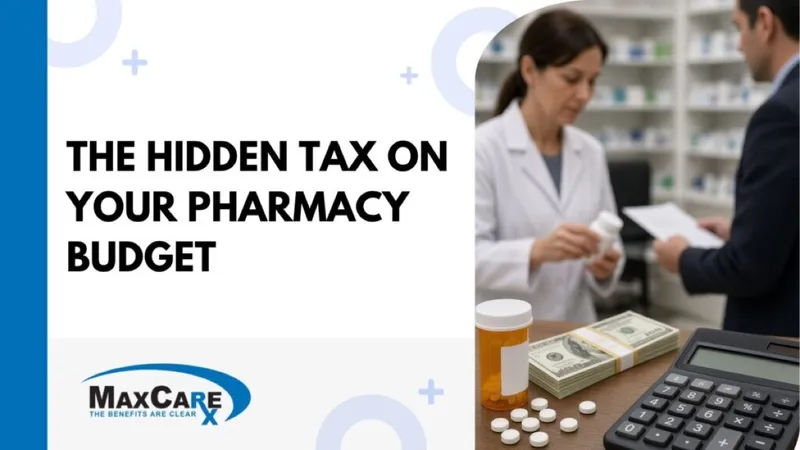
How PBM Spread Pricing Works and What You Can Do About It
Most self-insured employers know their pharmacy benefit costs are high. Fewer know exactly why, or where the money is going. Spread pricing is one…
Independent pass-through PBM · A PPOk company
Employer guide
A plain-language guide to transparent pharmacy benefit management: where the money goes in a traditional PBM contract, what changes under pass-through pricing, and how to verify it.
The short answerA pass-through PBM passes the prices it negotiates straight to your plan. You pay exactly what the pharmacy is paid, 100% of rebates and discounts flow back to you, and the PBM earns only a disclosed administrative fee. That removes spread pricing and retained rebates, so the PBM profits when your drug costs go down.

Follow the money
PBMs perform real administrative, clinical, network and claims work. The issue is how they are paid for it. In a traditional contract, much of the PBM’s revenue never appears as a fee.
| Revenue source | Traditional PBM | Pass-through PBM (MaxCare) |
|---|---|---|
| Spread pricing | Charges the plan more than it pays the pharmacy and keeps the difference | 0% spread. The plan pays what the pharmacy is paid |
| Manufacturer rebates | Shares only a fraction with the plan | 100% passed through to the plan |
| Drug discounts | Headline discounts can hide higher net cost | 100% passed through to the plan |
| Pharmacy ownership | Steers members to PBM-owned mail-order and specialty pharmacies | Owns no pharmacies. Community pharmacies stay in network |
| Administrative fee | Fees spread across many lines, some never visible | One flat, all-in fee, disclosed up front |
Why it matters now
The PBM market is highly concentrated. In its 2024 interim staff report, the Federal Trade Commission reported that the three largest PBMs processed nearly 80% of prescriptions dispensed by U.S. pharmacies in 2023, and that the six largest PBMs operated their own mail-order and specialty pharmacies.
In January 2026, the U.S. Department of Labor proposed PBM fee disclosure rules for self-insured group health plans, noting that plan fiduciaries often cannot see the payments PBMs and their affiliates receive. The proposal highlights manufacturer rebates, spread-type compensation and pharmacy recoupments.
For a self-insured employer, that makes pharmacy spend a fiduciary question, not only a benefits question. Read more in our guide to evaluating independent PBMs and our breakdown of hidden PBM fees.
Due diligence
Ask for an ownership and affiliate disclosure covering insurers, pharmacies and group purchasing organizations.
Every source of revenue should be named in the contract. At MaxCare it is one administrative fee.
Confirm that 100% of manufacturer rebates and other price concessions pass through, not just a narrowly defined subset.
Ask for claim-level data showing plan cost and pharmacy reimbursement side by side.
Pass-through terms should be verifiable. MaxCare offers pass-through pricing with full audit rights.
Pricing is half the picture. Ask what clinical programs act on specialty, GLP-1 and rare disease spend.
How MaxCare does it
Traditional PBMs keep the spread between what you pay and what the pharmacy receives.
MaxCare charges zero spread. You pay what the pharmacy is paid.
Traditional PBMs share only a fraction of rebates.
MaxCare passes through 100% of manufacturer rebates.
Traditional PBMs steer members to pharmacies they own.
MaxCare is fully independent: no insurer, no mail-order pharmacy, no conflicts.
Traditional PBMs bury fees across spread pricing, retained rebates and charges you never see.
MaxCare charges one transparent, all-in administrative fee, so you always know what you are paying for.
A pass-through pharmacy benefit manager passes the actual prices it negotiates straight to the plan. The plan pays exactly what the pharmacy is paid, 100% of manufacturer rebates and drug discounts go to the plan, and the PBM is paid through a disclosed administrative fee instead of hidden margins.
A traditional PBM can earn money from spread pricing (charging the plan more than it pays the pharmacy), from keeping part of manufacturer rebates, and from steering members to pharmacies it owns. A pass-through PBM gives up those revenue streams and earns only a disclosed fee, so it benefits when drug costs go down.
Spread pricing happens when a PBM charges the plan one amount for a prescription claim, reimburses the dispensing pharmacy a lower amount, and keeps the difference. The spread usually does not appear as an administrative fee, which is why employers miss it.
No. Independence removes ownership conflicts with insurers and PBM-owned pharmacies, but the contract still decides how claims are priced and rebates are handled. Employers should confirm pass-through terms, audit rights and claim-level reporting in writing.
MaxCare’s only revenue is a single, flat, all-in administrative fee, disclosed up front and kept separate from drug costs. MaxCare charges zero spread and passes through 100% of drug discounts and manufacturer rebates.
Self-insured employers that want to see and control what they spend on prescriptions, and the brokers, consultants and TPAs who advise them. MaxCare works with groups from about 100 to 10,000 members.
Keep reading
Most self-insured employers know their pharmacy benefit costs are high. Fewer know exactly why, or where the money is going. Spread pricing is one…
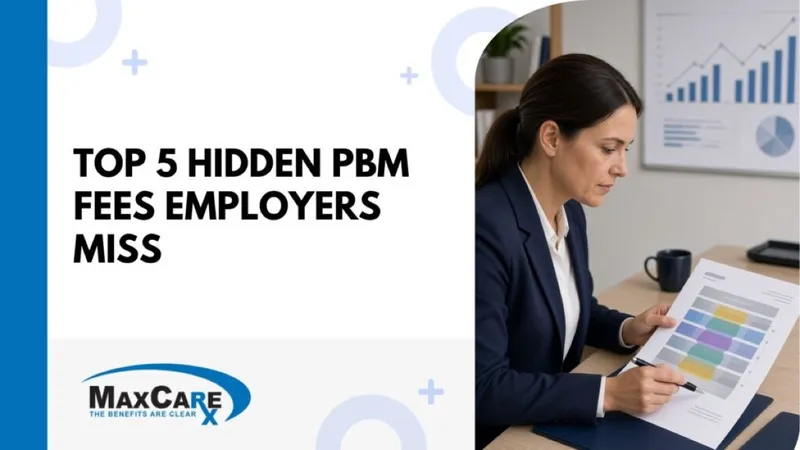
Most employers know pharmacy benefits are expensive. Fewer can see exactly where the money goes after a prescription claim is processed, a rebate…
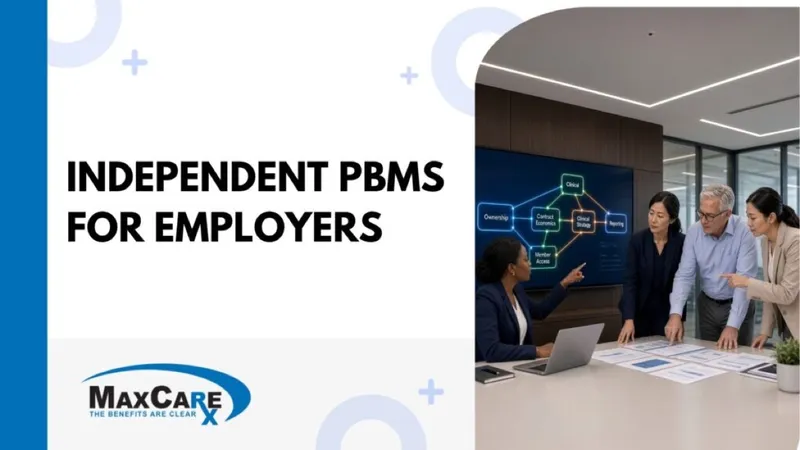
An independent pharmacy benefit manager (PBM) can give an employer a clearer path to aligned decision-making, but independence alone is not proof…
Get a no-obligation pharmacy spend analysis and see what MaxCare could save your organization, in plain language and backed by data.
Answers come only from maxcarerx.com. Please don’t share health information.
Hi! Ask me how pass-through pricing works, what our clinical programs do, or how to reach our team.