Independent PBMs for Employers: How to Evaluate Transparency, Alignment, and Total Cost
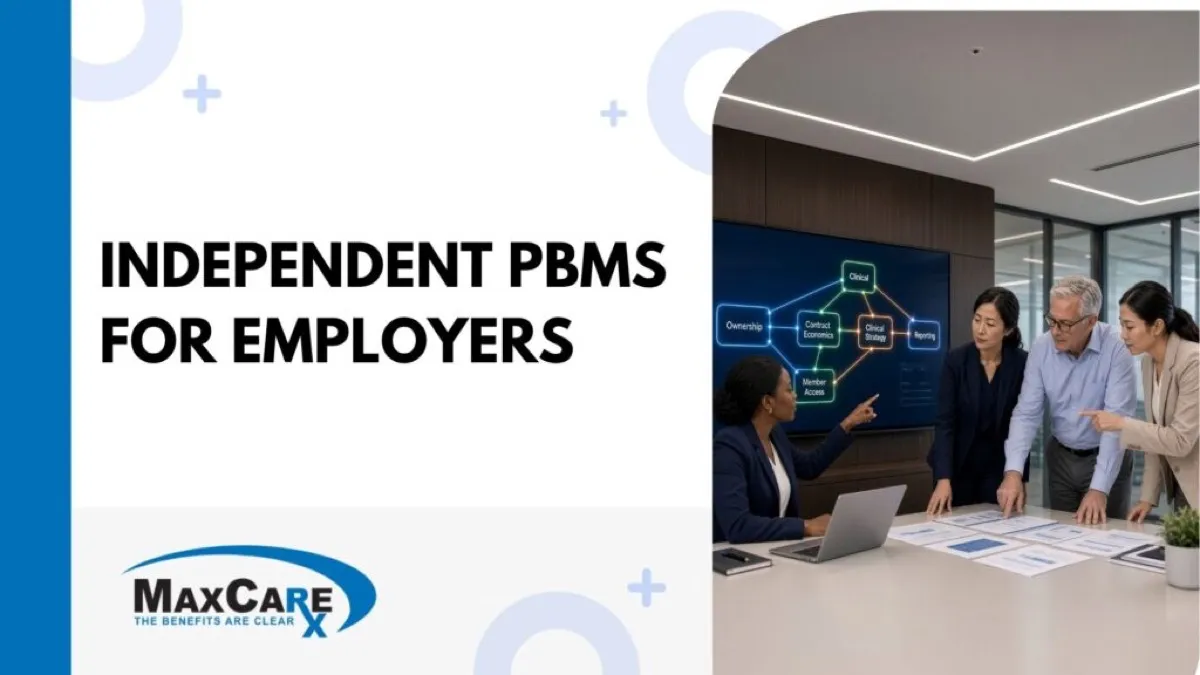
An independent pharmacy benefit manager (PBM) can give an employer a clearer path to aligned decision-making, but independence alone is not proof of transparency or lower cost. The stronger test is whether the PBM makes its ownership, compensation, pricing, rebate treatment, clinical strategy, and performance reporting clear enough for the employer to verify.
For plan sponsors, the goal is not simply to replace a large PBM with a smaller one. It is to choose a pharmacy benefit model that supports true lowest net cost, appropriate member access, and decisions the organization can explain to leadership, employees, and advisors.
This guide outlines the questions employers, brokers, consultants, and third party administrators ( TPAs) should ask when evaluating an independent PBM and the evidence they should expect in return.
Key Takeaways
- PBM ownership matters because affiliated insurers, mail-order pharmacies, and specialty pharmacies can create competing financial incentives.
- The word “independent” is a starting point, not a complete evaluation. Employers still need to examine the contract, revenue model, rebates, clinical programs, reporting, and network strategy.
- Pass-through pricing can improve financial clarity, but plan performance also depends on utilization management, specialty oversight, formulary decisions, and member access.
- A credible PBM evaluation should use the employer’s claims data, define the cost methodology, disclose assumptions, and identify how results will be measured after implementation.
What Is an Independent PBM?
An independent PBM is a pharmacy benefit manager that operates outside the ownership of a health insurer, retail or mail-order pharmacy, or specialty pharmacy organization. In an employer-aligned model, independence should be reinforced by transparent compensation, clearly defined pass-through pricing, accountable clinical decisions, and reporting that allows the plan sponsor to understand total pharmacy cost.
That second sentence is important. A PBM can be independent by ownership and still offer a contract that is difficult to audit, relies on spread pricing, retains part of manufacturer revenue, or provides limited insight into cost drivers. Employers should evaluate the operating model, not rely on the label.
Why Do PBM Ownership and Incentives Matter?
The PBM market is highly concentrated. In its 2024 interim staff report, the Federal Trade Commission reported that the three largest PBMs processed nearly 80% of prescriptions dispensed by U.S. pharmacies in 2023. The FTC also reported that the six largest PBMs operated their own mail-order and specialty pharmacies. Read the FTC report.
Vertical integration is not automatic proof that a plan is receiving poor value. It does, however, create questions an employer should be able to answer. Does the PBM benefit financially when members use an affiliated pharmacy? Can the plan verify whether a specialty channel is preferred because of clinical and cost performance? Are formulary choices evaluated on net cost and clinical value, rather than the size of a rebate?
These are governance questions as much as purchasing questions. A self-funded employer is responsible for a major category of healthcare spending. It needs enough contractual and operational visibility to determine whether the PBM’s incentives are aligned with the plan’s goals.
Is Every Independent PBM Transparent?
No. Independence can remove certain ownership conflicts, but it does not define how a PBM prices claims, handles rebates, manages specialty drugs, reports performance, or supports members. Those details live in the contract and the day-to-day operating model.
Employers should also be cautious about evaluating a proposal through one attractive metric. A high rebate guarantee does not necessarily produce the lowest overall cost. A low administrative fee does not reveal whether the PBM earns spread elsewhere. A broad network does not show whether members will be steered toward an affiliated channel.
The better objective is true lowest net cost: the plan’s total pharmacy expense after accounting for ingredient costs, dispensing fees, rebates and other price concessions, administrative fees, utilization, specialty-drug management, and the effect of plan design. The methodology should be defined before competing proposals are compared.
Six Questions Employers Should Ask an Independent PBM
1. Who owns the PBM and its related businesses?
Ask for a clear ownership chart that identifies parent companies, group purchasing organizations, pharmacies, clinical vendors, and other related entities. The purpose is not to reject every affiliation. It is to understand where revenue can flow and where a recommendation may benefit another part of the organization.
- Evidence to request: An ownership and affiliate disclosure, including financial relationships that affect the plan.
2. How does the PBM earn revenue?
The proposal should identify administrative fees, claim-level compensation, spread, retained rebates, data or service fees, pharmacy-related revenue, and payments from manufacturers or other vendors. Ask whether compensation can be reconciled to claims and contract terms.
Centers for Medicare and Medicaid Services (CMS) describes spread pricing in its Qualified Health Plan reporting framework as the aggregate difference between what a plan pays the PBM and what the PBM pays retail and mail-order pharmacies. That distinction gives employers a concrete question to ask: Will the plan be able to see and verify both sides of the transaction? Review the CMS pricing and rebate resource.
3. How are rebates and other price concessions handled?
A promise of rebate pass-through should be supported by definitions, timing, allocation rules, reconciliation procedures, exclusions, and audit provisions. Employers should understand whether 100% means all manufacturer revenue attributable to the plan or only amounts included in a narrower contractual definition.
- Evidence to request: The rebate definition, payment schedule, reconciliation process, and right to test the calculation.
4. How does the PBM control cost at the source?
Transparent pricing is important, but it does not manage utilization by itself. Ask how the PBM approaches prior authorization, formulary design, specialty oversight, biosimilar and generic opportunities, clinical exceptions, and ongoing utilization review. The PBM should be able to connect each program to both appropriate access and a measurable financial objective.
- Evidence to request: Program criteria, clinical governance, reporting measures, and examples of how recommendations are communicated to the plan.
5. What reporting and auditability will the employer receive?
A data file is not the same as actionable insight. Employers should know which reports they will receive, how often they will receive them, and who will explain the findings. Useful reporting may include total and per-member cost, specialty spend, generic utilization, rebates, trend drivers, clinical program activity, and progress against the financial baseline.
- Evidence to request: Sample reports, data-field definitions, delivery schedules, audit language, and a named process for resolving discrepancies.
6. How will the model protect member access?
Cost management should not be evaluated separately from the member experience. Review the retail network, specialty access, mail options, geographic coverage, disruption analysis, exception process, and member communication plan. For workforces in smaller cities and rural communities, access to community pharmacies may be an important part of adherence, continuity, and employee satisfaction.
- Evidence to request: A network disruption analysis based on current claims, plus an implementation plan for affected members.
What Should a Credible PBM Evaluation Include?
A strong evaluation begins with the employer’s own experience rather than a generic savings percentage. The analysis should establish a current-state baseline, define the comparison methodology, identify assumptions, and separate different sources of projected improvement.
- Claims baseline: At least 12 months of prescription activity, with specialty and high-cost claims identified appropriately.
- Contract review: Pricing definitions, guarantees, exclusions, compensation, rebates, audit language, and termination provisions.
- Net-cost analysis: Ingredient cost, fees, rebates, utilization, specialty programs, and other material financial components evaluated together.
- Clinical review: Current utilization controls, opportunities, member safeguards, and the assumptions behind projected program impact.
- Network analysis: Current pharmacy use, potential disruption, geographic access, and member communication needs.
- Performance plan: The measures, reporting cadence, owners, and review process that will continue after implementation.
This approach gives HR and finance leaders a more defensible business case. It also helps brokers, consultants, and TPAs compare models using the same financial and operational definitions.
When Does Switching PBMs Make Business Sense?
A PBM change may deserve serious consideration when the employer cannot determine how the PBM is compensated, reconcile guarantees to total cost, obtain usable claims-level reporting, explain specialty and formulary decisions, or verify that financial commitments are being met.
A switch is not automatically the right answer. Transition costs, contract timing, member disruption, implementation capacity, and the strength of the projected opportunity all matter. A responsible advisor should be willing to say when the available evidence does not justify a change.
The decision should therefore be based on a documented comparison, not dissatisfaction alone. Employers need to know what will change, why it should improve plan performance, how the improvement will be measured, and what protections will apply if expectations are not met.
How MaxCare Rx Approaches Employer Alignment
MaxCare Rx is an independent, employer-aligned pharmacy benefit manager focused on reducing total pharmacy spend while preserving appropriate member access and improving plan performance. Its model combines 100% pass-through pricing, zero spread pricing, clinically driven cost management, transparent reporting, and high-touch advisory support.
The focus is not rebate optimization in isolation. It is financial discipline across pricing, utilization, specialty management, clinical decisions, and reporting. That gives employers and their advisors a clearer view of what is driving pharmacy cost and what actions may improve performance.
For organizations evaluating their current arrangement, a pharmacy spend analysis can establish the baseline, identify cost drivers, and test whether a different model is financially and operationally justified.
Next step: Request a pharmacy spend analysis from MaxCare Rx.
Frequently Asked Questions
What makes a PBM independent?
An independent PBM operates outside the ownership of a health insurer, retail or mail-order pharmacy, or specialty pharmacy organization. Employers should also evaluate whether the PBM’s compensation, pricing, and clinical decisions reinforce that independence.
Are all independent PBMs pass-through?
No. Independence describes ownership, while pass-through describes how drug costs, rebates, and other financial components are handled. The employer should verify both through the contract.
How does an independent PBM make money?
Revenue models vary. Some charge transparent administrative or claim fees, while others may use spread, retain manufacturer revenue, or earn compensation through related services. Employers should request a complete compensation disclosure.
What should employers look for in a PBM contract?
Key areas include pricing definitions, rebate treatment, compensation, guarantees, exclusions, data access, audit rights, clinical program terms, network requirements, performance measures, and termination provisions.
Can an independent PBM manage specialty drug costs?
Yes, if it has a clinically grounded specialty strategy. Employers should ask how the PBM manages authorization, site or channel decisions, formulary options, appropriate alternatives, member exceptions, and ongoing performance.
How can employers compare PBM proposals?
Use a common claims file, time period, benefit design, network assumptions, and net-cost methodology. Require each bidder to disclose assumptions and separate guaranteed amounts from modeled opportunities.
What data is needed for a pharmacy spend analysis?
A typical evaluation uses prescription claims, eligibility information, plan design, current contract terms, rebate information, and relevant clinical or utilization reports. Data should be shared through a secure, approved process.
Conclusion: Evaluate Alignment, Not Just the Label
Independent PBMs can offer employers a more direct and accountable alternative to vertically integrated models, but ownership is only one part of the decision. The stronger evaluation asks whether the PBM’s financial model, clinical programs, reporting, and network strategy are transparent and aligned with the employer’s goals.
When those elements are defined clearly, employers can move beyond headline guarantees and compare pharmacy benefit strategies on true lowest net cost, member access, and measurable plan performance. That is the standard MaxCare Rx brings to employer pharmacy benefit decisions.